What is the Best Gaming PC for Your Needs?
Choosing the right Gaming PC can be a daunting task. With countless options available, it is essential to understand what suits your needs best. Each gamer has unique preferences based on the types of games they enjoy. From casual players to hardcore enthusiasts, the right configuration can make all the difference.
Consider your gaming style and requirements carefully. A high-end Gaming PC may be ideal for those seeking top-tier graphics and speed. However, budget constraints often lead to compromises. Reflect on what is most important to you. Are you after impressive visuals or solid performance?
Researching brands and specifications is critical. Look for reviews that highlight user experiences. Reliable information from trusted sources can guide your decision-making process. Ultimately, your choice should align with your gaming goals while considering your budget. Finding that perfect balance may require patience and thoughtful consideration.
Understanding Your Gaming Needs and Preferences
When choosing a gaming PC, understanding your needs is crucial. Gamers often have different priorities. Some may focus on high frame rates for competitive play. Others might prefer stunning graphics for immersive experiences. Identifying what matters most can guide your decision.
Consider the types of games you play. If action-packed shooters dominate your library, a powerful CPU and GPU are essential. For strategy games, some may prioritize RAM. Think about your preferred gaming resolution too. Aiming for 4K visuals demands more from your machine. Reflect on your current setup. Are there aspects you often find lacking? This self-assessment can direct your choice.
Budget is another important factor. High-performance gaming PCs can be costly. Are you willing to invest? Sometimes, spending less means compromising on certain features. Balance is key here. Recognize that there may not be a “perfect” choice. Each PC has trade-offs. Embrace the idea of prioritizing what is most important. Evolving your preferences over time is natural.
Key Components of a High-Performance Gaming PC
When building a high-performance gaming PC, the right components make a significant difference. A robust CPU is crucial. It acts as the brain of your system. According to industry reports, a mid to high-end processor like the latest multi-core CPUs can enhance gaming performance dramatically. This is especially true for resource-heavy titles. A balanced blend of speed and core count is essential for seamless gameplay.
Next, the graphics card often takes the spotlight. It handles the demanding visuals, making it a vital component. Research shows that gamers prefer GPUs with higher frame rates and better rendering abilities. Look for a graphics card that can effortlessly manage 1080p or even 4K resolution. A solid power supply unit is also key, ensuring stable performance under load.
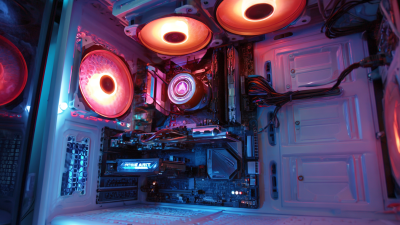
Tip: Invest time in cooling solutions. Overheating can lead to performance drops. Additionally, consider how future-proof your build is. Technology evolves quickly. Planning for upgrades may save costs in the long run. Remember that your gaming experience hinges on these components. Balancing quality and budget is a common challenge. Reflect on your gaming habits as you plan your build.
Performance Comparison of Gaming PC Components
Budget Considerations for Building or Buying a Gaming PC
When considering building or buying a gaming PC, budget is often the decisive factor. According to a recent report from Jon Peddie Research, nearly 60% of gamers prioritize price over performance. This illustrates that many gamers seek the best value for their investment. A budget-friendly gaming PC typically ranges from $500 to $1,000. For this price, users can secure decent processors, mid-range graphics cards, and sufficient RAM for most games.
However, quality may sometimes suffer in lower-priced builds. Reports show that budget PCs could face performance issues with demanding titles. Gamers often encounter limitations in graphics quality and frame rates. Investing slightly more can offer a significantly better experience. In fact, data indicates that spending an extra $200 can yield up to 30% improvement in performance and longevity.
Additionally, consider future upgrade paths. Spending all your budget upfront often leads to difficulties later. A modular approach allows for incremental upgrades. Research suggests that gamers who plan for future enhancements fare better in long-term satisfaction. Balancing cost and quality is challenging, yet crucial for a successful gaming setup.
Prebuilt vs. Custom-Built Gaming PCs: Pros and Cons
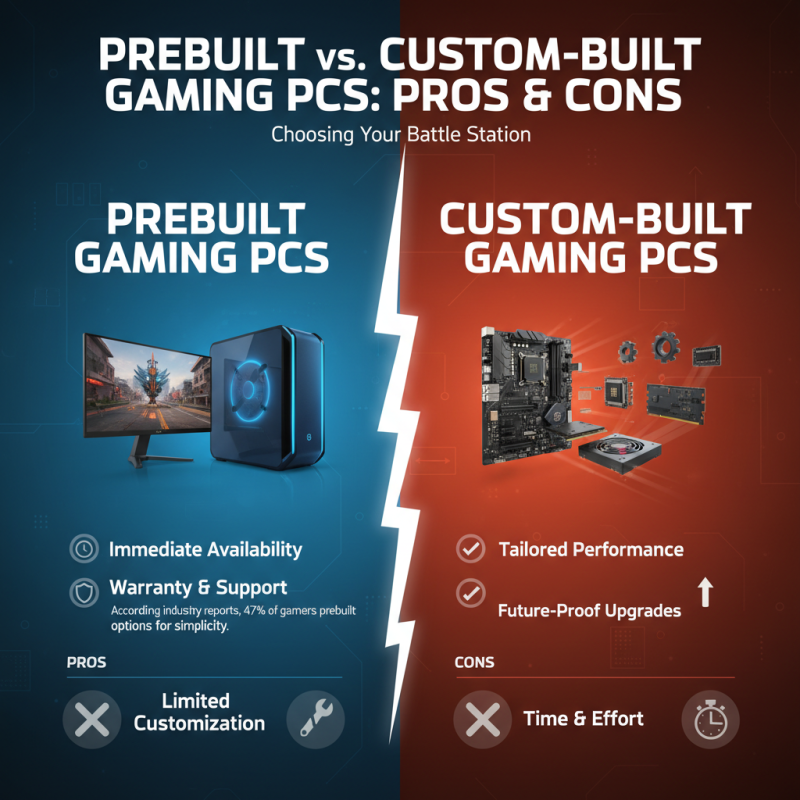
When choosing between prebuilt and custom-built gaming PCs, consider the distinct advantages and drawbacks of each. Prebuilt systems are convenient. They offer immediate availability, allowing gamers to dive into their favorite titles quickly. According to industry reports, about 47% of gamers prefer prebuilt options for their simplicity. Additionally, these systems typically come with warranties, ensuring peace of mind. However, the trade-off is often a lack of customization, which can restrict performance tuning and upgrades down the line.
Custom-built PCs, on the other hand, cater to individual preferences. Gamers enjoy choosing every component, from CPUs to GPUs. This route allows for superior performance matching personal gaming styles. Data from a recent survey indicates that 53% of gamers see value in building their own PCs. Yet, this process can be daunting. Selecting compatible parts requires research and technical skill. New builders might face challenges during assembly, leading to potential setup errors. In some cases, the cost may also exceed that of a prebuilt system when high-end components are chosen.
Future-Proofing Your Gaming PC for Upcoming Titles and Upgrades
When considering future-proofing your gaming PC, components play a critical role. Graphics cards, CPUs, and RAM must meet or exceed the recommended specifications for upcoming titles. A recent industry report revealed that 73% of gamers prefer systems with at least 16GB of RAM. This demand is driven by emerging games that require more memory for smoother performance.
Investing in the latest hardware, like PCIe 4.0 NVMe SSDs, can enhance loading times dramatically. A study indicates that systems with SSDs can load games up to 70% faster than those using traditional hard drives. Players can find themselves in the game world sooner, creating a more engaging experience. However, the rapid pace of technological advances is daunting. The challenge lies in balancing current needs with the potential for upgrades.
Cooling systems are another vital aspect. As games become more demanding, effective cooling solutions are necessary to prevent overheating. High-performance components generate heat, risking performance dips. Many gamers overlook this detail until it becomes a problem. Failing to plan for adequate cooling might lead to regrets down the line. Ultimately, a well-thought-out gaming PC can serve you well into the future.