How to Choose the Best Liquid Cooler Radiator for Your Needs?
Choosing the right Liquid Cooler Radiator can be challenging. In recent years, the demand for efficient cooling solutions has grown as hardware becomes more powerful. According to a 2022 study by Jon Peddie Research, the global market for PC cooling systems is projected to reach $3.6 billion by 2025. This highlights the importance of selecting an effective radiator.
When considering a Liquid Cooler Radiator, a few key factors emerge. Radiator size, fin density, and material quality significantly impact cooling performance. A study published in the Journal of Thermal Science emphasizes that a higher fin density can boost heat dissipation, leading to more effective cooling. However, enthusiasts often overlook the balance between noise levels and cooling efficiency.
While many options are available, not all radiators deliver what they promise. Users should recognize the need for thorough research before purchasing. Reviews from reliable sources can shed light on performance discrepancies among models. An informed choice in Liquid Cooler Radiator can enhance system performance and prolong hardware lifespan.
Understanding Liquid Cooling: Benefits and Key Components
Liquid cooling has gained traction in recent years, largely due to its efficient heat management. One significant advantage is the superior thermal performance. According to a study from Tom's Hardware, liquid cooling can reduce CPU temperatures by 20°C more than air coolers. This is crucial for gaming and high-performance applications, where overheating can hinder performance.
Key components of liquid cooling systems include the radiator, pump, and reservoir. The radiator dissipates heat from the coolant. Its size and efficiency directly affect cooling performance. A study by TechSpot highlights the importance of radiator thickness. Thicker radiators often provide better cooling but may require more space. Pumps circulate the coolant, and their flow rate is vital. A higher flow rate can enhance heat transfer but may increase noise.
Despite the benefits, liquid cooling isn't without its challenges. Installation can be complex and requires more maintenance than air cooling systems. Additionally, the risk of leaks, while low, exists. Enthusiasts must weigh these factors against the potential for enhanced performance. Each system demands careful consideration of components to ensure reliability and efficiency.
Analyzing Radiator Size: How Surface Area Affects Cooling Efficiency
When selecting a liquid cooler radiator, surface area plays a crucial role. Larger surface areas allow for more efficient heat dissipation. According to industry research, radiators with increased surface area can deliver up to 30% better cooling performance. This is particularly important for high-performance systems that generate significant heat.
The type of material used in the radiator also affects cooling efficiency. Radiators made from copper generally offer superior thermal conductivity compared to aluminum. However, copper can be heavier and more expensive. It’s essential to consider the balance between weight, cost, and cooling efficiency when making a choice.
System layout impacts the effectiveness of a radiator as well. Poor airflow around the radiator can negate its benefits, regardless of size. Regular maintenance is necessary as dust can build up and reduce performance over time. Failing to assess these factors can result in subpar cooling, ultimately impacting system longevity. Therefore, assessing both surface area and material while ensuring optimal airflow is vital for effective cooling solutions.
Evaluating Radiator Material: Aluminum vs. Copper Performance Insights
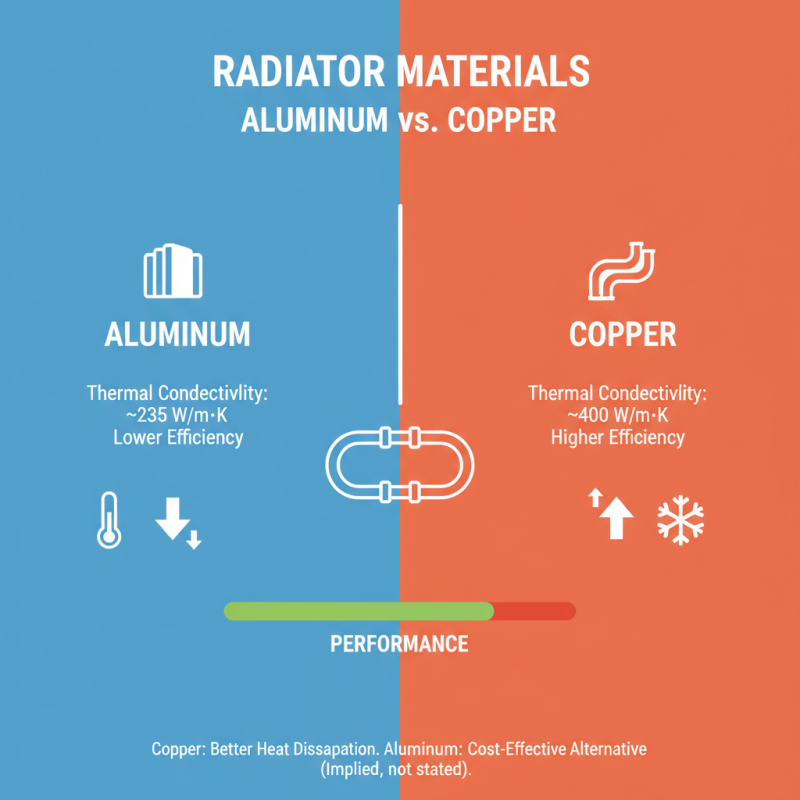
When evaluating radiator materials for liquid coolers, aluminum and copper each have distinct characteristics. Copper is noted for its superior thermal conductivity. Reports indicate it can reach values around 400 W/m·K, making it more efficient in heat dissipation. Conversely, aluminum’s thermal conductivity is lower, typically around 235 W/m·K. This difference influences overall cooling performance.
Aluminum is lighter and often more cost-effective. It offers advantages in weight-sensitive builds. However, its lower performance means that systems using aluminum may require larger radiators to achieve similar cooling results. For example, data shows that to match a copper radiator’s performance, an aluminum unit might need to be 20% larger.
Corrosion resistance is another factor. Copper can develop corrosion if exposed to specific coolant mixtures. On the other hand, aluminum, being more resistant, benefits in longevity. Users should consider their cooling needs and style of usage. High-performance gaming or workstation setups may favor copper. Yet, for budget builds or general tasks, aluminum remains a viable option. Understanding these nuances enables informed decisions when selecting the right radiator material.
Assessing Fan Compatibility: Noise Levels and Airflow Metrics
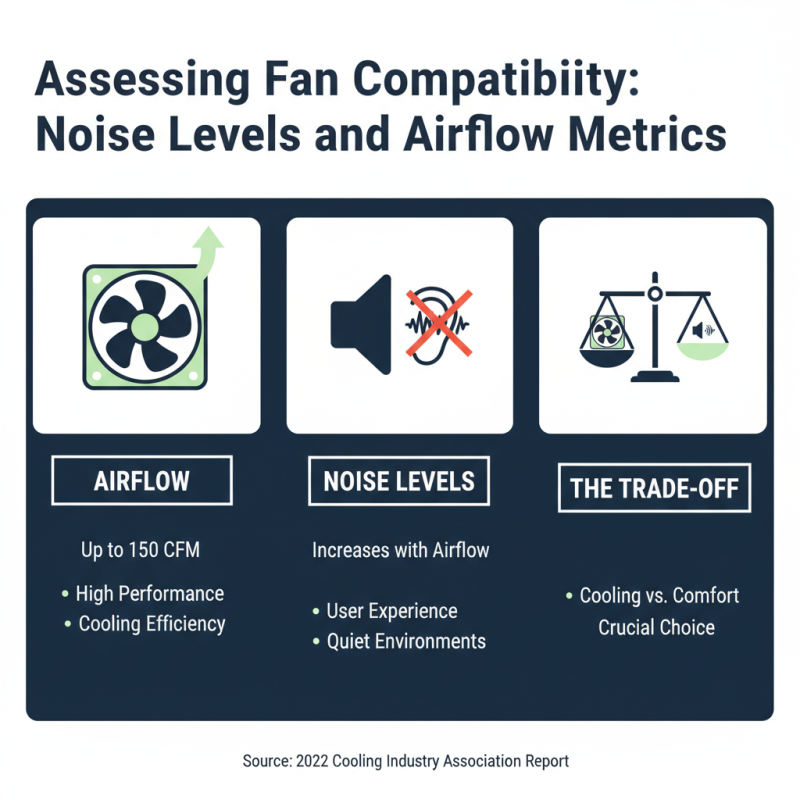
When selecting a liquid cooler radiator, fan compatibility is crucial. Noise levels and airflow metrics greatly influence cooling efficiency. A 2022 report by the Cooling Industry Association showed that high-performance fans reach airflow rates up to 150 CFM (cubic feet per minute). However, with higher airflow, noise levels often increase. This trade-off can affect user experience, especially in quiet environments.
Many fans operate between 20 and 30 dB (decibels) for optimal performance. Fans above this range can disrupt focus in quiet settings. Users should consider fan specifications carefully. Look for fans that offer a good balance between airflow and noise levels. The most effective configurations often include multiple fans, which can circulate air efficiently.
Tip: Always check fan RPM (revolutions per minute) ratings. Higher RPM can lead to better cooling but might increase noise. Balancing these aspects requires reflection on your specific needs. If possible, try to find reviews or benchmarks that show real-world performance. This information can provide insight into your ideal setup.
Choosing Radiator Style: Single, Dual, or Triple Radiator Configurations
When selecting a liquid cooler radiator, understanding the configuration style is crucial.
Single, dual, and triple radiator setups each offer distinct advantages.
Single radiators are often compact, suitable for smaller builds. They can effectively cool mid-range systems.
However, they may struggle with high-performance CPUs or GPUs.
In contrast, dual radiators increase cooling capacity significantly.
Industry reports indicate that dual setups can reduce temperatures by up to 20% compared to single radiators.
This makes them ideal for gaming rigs or overclocked systems. Yet, they require more space, which may not fit in every case.
Triple radiators excel in cooling efficiency.
They distribute heat effectively, making them favored among enthusiasts.
However, they demand substantial case space and can be overkill for standard builds.
The choice should depend on your cooling needs and available space.
Tips: Ensure your case supports the radiator size you choose.
Regular cleaning and maintenance enhance performance and prolong lifespan.
Remember, opting for a larger radiator may lead to better cooling, but it also increases noise levels.
Consider your environment when making a decision.