What is a Power Supply Manufacturer and How to Choose One?
In today's technology-driven world, power supply manufacturers play a crucial role. They create essential devices that provide energy to various electronic components. Selecting a reliable manufacturer can be a challenging task. There are numerous options available, each claiming to be the best in the industry.
When seeking a power supply manufacturer, consider quality and performance. Not all manufacturers use the same standards. Some may cut corners to reduce costs. This could lead to inefficiencies or even failures in your devices. It's vital to research multiple companies and read reviews.
Additionally, evaluate their certifications and industry experience. A seasoned manufacturer will have a better understanding of your specific needs. Clear communication is essential. It helps in navigating the complexities of product specification. Therefore, taking the time to choose wisely can have positive repercussions on your projects.

What is a Power Supply Manufacturer and Their Role in Electronics?
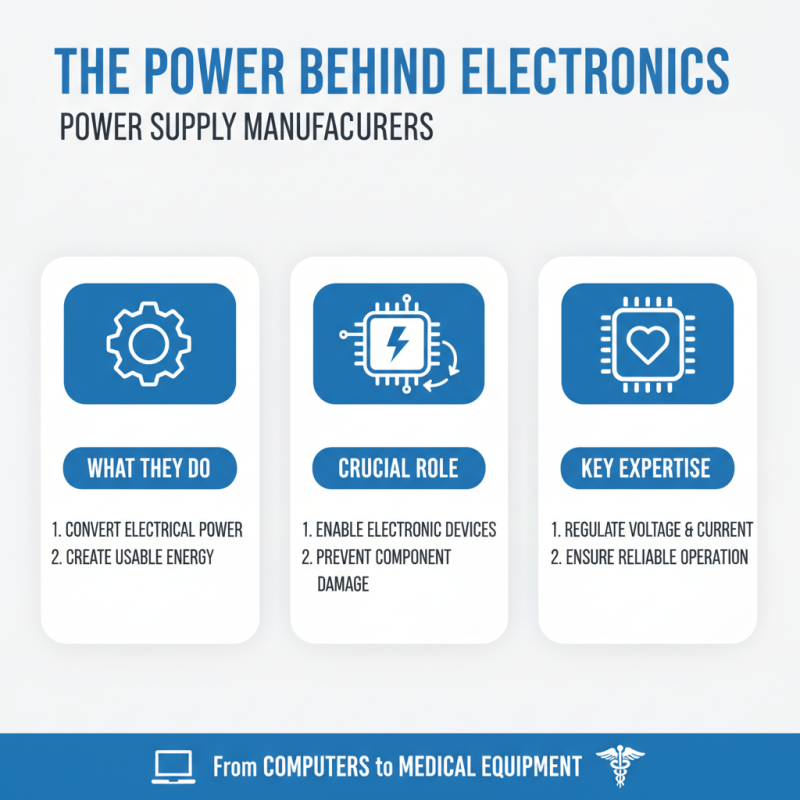
A power supply manufacturer plays a crucial role in modern electronics. They create devices that convert electrical power into usable forms. This conversion is essential for the operation of various electronic devices, from computers to medical equipment. Their expertise ensures that the right voltage and current flow into components, preventing damage.
Choosing the right manufacturer can be challenging. Start by assessing their quality control standards. Look for certifications that demonstrate adherence to international safety requirements. High-quality manufacturers have rigorous testing procedures. These procedures validate the reliability of their power supplies.
Tip: Don't overlook customer service. A responsive team can help you navigate technical issues. They should offer guidance during your selection process.
Consider their production capability. Are they able to scale? This can affect long-term partnerships. A manufacturer that can adapt to changing needs often provides stability. However, not all manufacturers can meet such demands consistently.
Tip: Conduct thorough research. User reviews can provide insights that official channels may not reveal. Sometimes, a promising manufacturer does not deliver on their promises. Be cautious and make informed decisions.
Key Types of Power Supplies: Understanding AC, DC, and Switch-Mode Variants
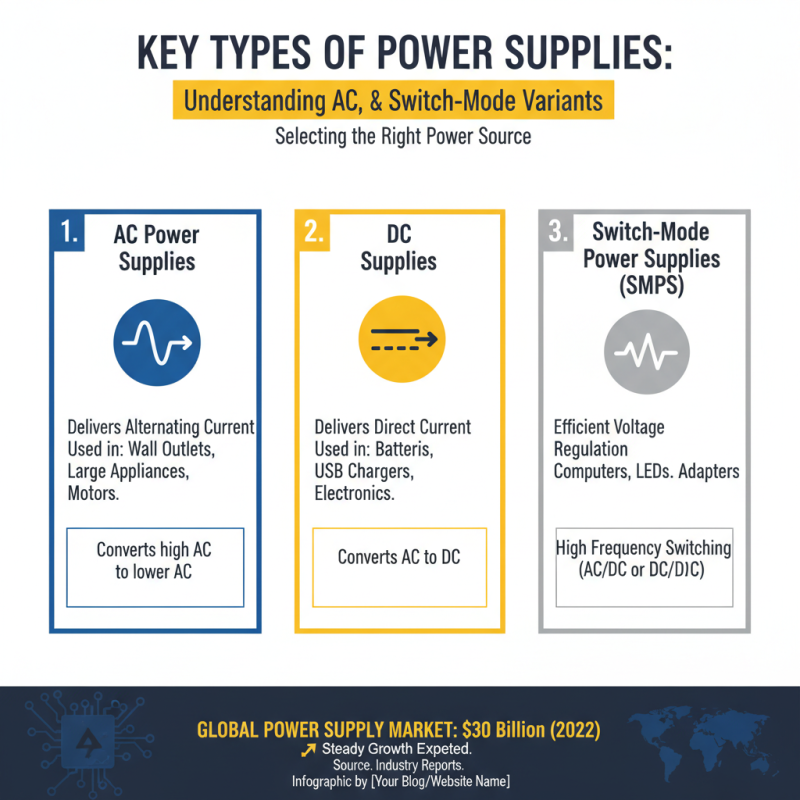
Understanding different types of power supplies is crucial for selecting the right one. Power supplies can be broadly categorized into AC, DC, and switch-mode variants. Each type serves distinct purposes and applications. According to industry reports, the global power supply market was valued at approximately $30 billion in 2022, with a steady growth rate expected in the coming years.
AC power supplies are often seen in homes and commercial buildings. They deliver alternating current, which is essential for most electrical appliances. On the other hand, DC power supplies provide direct current. This type is frequently used in electronic devices and battery-operated products. The choice between AC and DC can impact efficiency and performance. Not every device can handle both types without issues, which can lead to unnecessary complications.
Switch-mode power supplies (SMPS) have gained popularity due to their efficiency. They convert electrical power using switching techniques, providing better performance in a compact size. A report indicated that SMPS can improve energy efficiency by up to 90% in certain applications. However, they may introduce complexity in the circuit design. Understanding these nuances is essential for making an informed decision. Balancing efficiency with compatibility is often a challenging but necessary task.
Factors to Consider When Choosing a Power Supply Manufacturer
When choosing a power supply manufacturer, several factors come into play. Quality is paramount. Look for manufacturers with a strong track record of reliability. Their power supplies should undergo rigorous testing. Check if they have certifications that indicate safety and performance standards.
Another important aspect is customer support. A manufacturer that offers solid support is invaluable. If something goes wrong, or you have questions, quick assistance can save you time and frustration.
Tips: Research online reviews and testimonials. They can provide insight into other customers’ experiences. Consider your specific needs. Different applications may require different types of power supplies. Take your time to assess different options. Reflect on what is truly important for your projects.
Industry Standards and Certifications in Power Supply Manufacturing
When selecting a power supply manufacturer, industry standards and certifications play a crucial role. These benchmarks ensure that the products meet quality, safety, and performance expectations. Common certifications include ISO 9001, which relates to quality management systems, and CE marking, indicating compliance with European safety regulations. Manufacturers with these certifications demonstrate a commitment to stringent quality control.
However, not all manufacturers follow through with these standards. Some may claim certifications that are outdated or not relevant to their products. It’s essential to verify the current status of these certifications. Look for documentation and recent audits; it can save you from costly mistakes.
In addition, consider manufacturers that adhere to IEEE or IPC standards. These focus on the electrical and electronic components' reliability in various applications. Remember that a certification alone does not guarantee performance. It’s important to assess the manufacturer's history with specific products. Actual customer feedback is invaluable. This nuanced approach can lead to better choices while navigating through numerous manufacturers.
Market Trends: The Future of Power Supply Technologies and Innovations
The power supply industry is rapidly evolving. Market trends show a significant shift towards efficiency and sustainability. Innovations in power supply technologies include the incorporation of renewable energy sources. These changes are driven by the demand for greener solutions.
Tips for choosing a power supply manufacturer include evaluating their commitment to these advancements. Look for companies that prioritize energy efficiency certifications. This can indicate they are ahead in technology trends. Check if they invest in research and development, as this reflects their vision.
It's important to remember that not all manufacturers will meet your specific needs. Some may focus heavily on one aspect, like cost, while neglecting performance. Be wary of deals that seem too good to be true. Evaluate the long-term benefits of investing in a quality manufacturer over a cheaper option.
Market Trends in Power Supply Technologies