2026 Top Watercooling Radiator Suppliers Worldwide
The 2026 Top Watercooling Radiator Suppliers Worldwide guide examines the companies shaping modern liquid-cooling performance. It focuses on engineering quality, manufacturing consistency, and practical installation needs. A radiator may look simple, yet its copper tubes, aluminum fins, solder joints, and protective coating affect long-term reliability. Small details matter.
Hardware Labs founder Gennaro “Nils” Colombo has explained, “Radiator performance is always a balance between surface area, airflow, and restriction.” That principle remains useful for builders and procurement teams. A thick radiator can dissipate substantial heat, but only with suitable fans and enough case clearance. A slim model may fit better inside a compact workstation. Neither option wins every build.
This guide compares Watercooling Radiator suppliers through measurable and practical criteria. These include thermal testing, fin density, tube design, pressure tolerance, product range, warranty support, and documented quality control. It also considers supply stability and regional availability. A supplier with impressive specifications may still disappoint if replacement units arrive slowly. That is where evaluation becomes less tidy.
Results can change with fan speed, coolant temperature, pump settings, and mounting orientation. Real installations rarely match laboratory conditions. Readers should treat rankings as informed guidance, not permanent truth. Some data may remain incomplete, especially when suppliers publish limited test information. Careful buyers should verify current specifications before ordering. In 2026, the strongest suppliers will combine efficient designs, honest documentation, dependable service, and fewer surprises inside the case.
What a Watercooling Radiator Is and Why Supplier Choice Matters
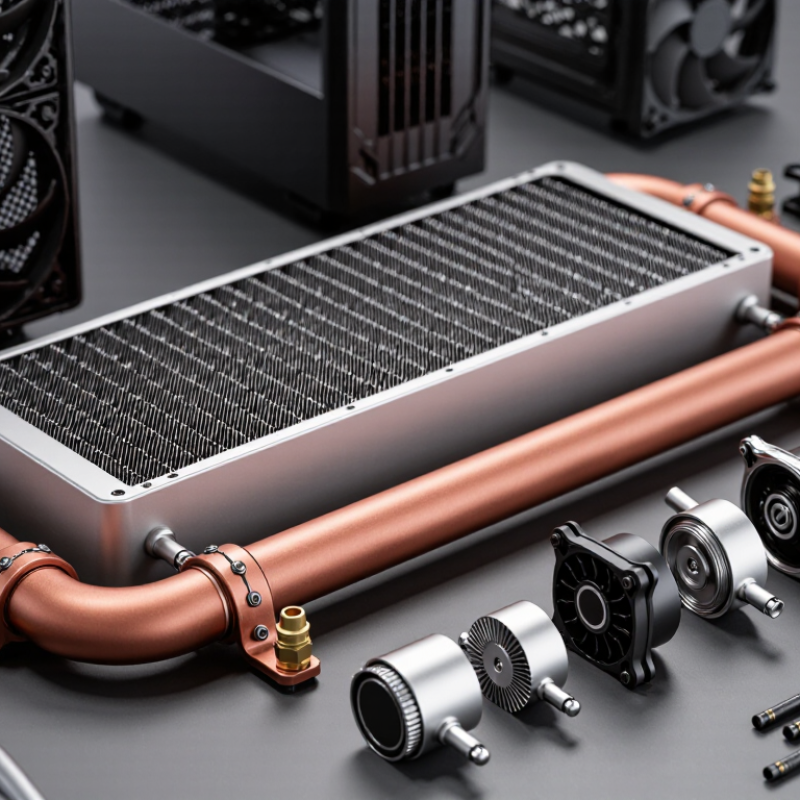
A watercooling radiator removes heat from liquid coolant through metal tubes and fins. Warm coolant enters, spreads through internal channels, and releases heat through the fin surface. Fans then move air across those fins. The process sounds simple, but small design choices matter. Fin density, copper or aluminum construction, tube thickness, port placement, and radiator length affect cooling performance and installation space.
Supplier choice matters because a radiator is only as dependable as its manufacturing process. In practical system builds, I check brazed joints, surface quality, thread accuracy, and pressure-test records. A reliable supplier should provide material details, dimensional drawings, production tolerances, and clear quality-control evidence. It should also explain coolant compatibility and operating limits. A low price can hide inconsistent soldering or weak packaging. I once underestimated shipping protection, and a slightly bent radiator caused difficult fan alignment. That mistake was avoidable.
Tips: Confirm radiator dimensions before ordering. Ask for pressure-test results and sample inspection photos. Compare warranty terms, delivery reliability, and technical support. For demanding systems, request a sample before placing a large order. No supplier is perfect. Transparent answers are often more valuable than impressive claims. Be careful with unclear specifications, especially when ports, coatings, or mixed metals may affect long-term reliability.
2026 Top Watercooling Radiator Suppliers Worldwide
What a Watercooling Radiator Is and Why Supplier Choice Matters
This chart compares common PC watercooling radiator formats by nominal fan size. The 120, 140, 240, 280, 360, and 420 formats correspond to one, two, or three fan positions using 120 mm or 140 mm fans. Actual external dimensions vary by manufacturer, including end-tank length, width, and thickness. When evaluating suppliers, compare material quality, tube construction, fin density, pressure testing, dimensional consistency, and compatibility with the intended fans and case.
How Radiator Materials, Designs, and Cooling Performance Differ
2026 Top Watercooling Radiator Suppliers Worldwide
Choosing among top watercooling radiator suppliers worldwide requires more than comparing catalog numbers. Copper tube-and-brass fin assemblies usually transfer heat reliably and tolerate repeated thermal cycling. Aluminum radiators can reduce weight and cost, but mixed metals demand careful corrosion control. Material choice affects service life, coolant compatibility, and repair options. In practical builds, I inspect solder joints, port threads, fin alignment, and surface coating before trusting a performance claim. Small defects matter.
Radiator design changes how cooling capacity feels in a real system. A thicker core stores more fluid and exposes more fin area, yet it may need stronger fans. Dense fins can improve heat exchange, but they also raise airflow resistance and noise. A slim radiator often performs better inside a restricted case. Tube layout matters too: wider channels can reduce pressure loss, while multi-pass paths may increase contact time. Not always better.
Reliable suppliers should publish test conditions, not only maximum heat figures. A useful comparison records ambient temperature, coolant flow, fan speed, radiator thickness, and mounting position. Cooling performance should be judged by the coolant-to-ambient temperature difference, not a single peak reading. Repeating tests after dust buildup can reveal practical weaknesses. My own measurements can still be imperfect, especially when room temperature changes. That uncertainty deserves honest reporting.
Where the Leading Watercooling Radiator Suppliers Are Located in 2026
Watercooling radiator suppliers are concentrated where metal processing, electronics, and export logistics already operate together. In 2026, China remains the largest manufacturing base, especially across Guangdong and Jiangsu. These regions offer copper and aluminum processing, automated brazing, and dense component networks. Taiwan also remains important for precision manufacturing and engineering support.
Europe has a smaller supplier population but strong technical specialization. Germany, Italy, and Poland host manufacturers serving industrial cooling, workstation, and enthusiast-computer markets. North America mainly supports engineering, distribution, and custom system integration rather than high-volume radiator production. This geographic pattern matches the MarketsandMarkets Data Center Liquid Cooling Market report, which forecasts above-20% annual growth through 2029. Grand View Research also identifies Asia-Pacific as a major growth region for liquid cooling equipment.
Location still needs verification. A factory address does not prove stable quality. I have seen supplier profiles with impressive specifications but limited testing evidence. Buyers should request thermal resistance data, pressure-test records, fin-density details, and material certificates. Production capacity should be checked during peak season.
Tips: Compare suppliers by delivery distance, corrosion-control methods, and inspection procedures. Ask for current samples, not only catalog images. The best location is not always the cheapest one. It is the one that provides consistent tolerances, traceable materials, and practical technical communication.
How to Choose the Right Radiator Supplier for Your Project
Choosing the right radiator supplier in 2026 requires more than comparing prices. Start with your project’s heat load, space limits, coolant type, and expected service life. A reliable supplier should provide measured thermal data, pressure-test results, material specifications, and clear tolerance standards. Ask whether performance tests reflect your operating conditions, not only ideal laboratory settings.
Experience matters when installation space is tight or cooling demand changes during production. Review the supplier’s engineering support, prototype process, customization ability, and quality-control records. Request samples before approving a large order. Check fin density, tube construction, weld quality, coating consistency, and connection dimensions. Small differences can create leaks or poor airflow. I have found that vague documentation often creates more risk than a slightly higher quotation. Still, even experienced suppliers can miss details.
Tips: Compare at least three qualified suppliers. Confirm lead times in writing. Ask about replacement parts and warranty handling. Verify independent certifications where relevant. Inspect packaging, because damaged fins may reduce performance before installation. Keep a written approval record for drawings, materials, and test conditions. Do not choose the lowest price automatically. It may be the expensive option later. Manufacturers with transparent communication usually handle design changes better, although no supplier is perfect. Build a contingency plan for delayed samples, revised specifications, and unexpected installation changes.